
The product goes to the world. The company stays here.
Science in Russia and the CIS is strong. What is missing is the commercialisation layer - the people, capital and procedures that turn a laboratory result into a working company. We add that layer locally instead of exporting the result.
Where is the catch?
We know what people bring to competitions like this. The region has had plenty of “innovation contests” that took data, did not deliver what was promised, or simply never replied. Direct answers below - each one written into documents you can read before you apply.
Round 1 is submitted in open terms: the problem, the evidence, the benefit. Methods, closed data and implementation detail are neither needed nor requested at that stage. Confidential material comes only after an NDA, and only to a named reviewer.
You may name up to five individuals and organisations that must not see your application. Reviewers declare conflicts of interest and are recused from applications in their own area of interest.
Taking part gives us no IP rights, no right of first refusal and no option on future rounds. If you do not take the investment, both sides walk away with no obligations.
We work with the laboratory, not around it. The supervisor is named in the application, the university’s IP rules are respected, and the technology-transfer office is brought in at the agreement stage. Judges and mentors sign non-solicitation terms.
Every eligible application receives written comments from at least three reviewers. Response times for each stage are fixed in the rules.
There are no fees, no paid options and no mandatory intermediaries at any stage. Selection is done by reviewers against a published rubric.
The prize fund is secured as of the opening of applications - this is not a fundraise dressed as a contest. The structure of the fund and the source of the prize money are published before 1 October 2026. Investment is executed as an agreement with fixed terms, not a memorandum of intent.
Fair. Cycle I is a pilot: 12 rounds, 12 finalists. That is exactly why we publish the rules in advance and a report at the end, and promise only what the documents commit us to.
Documents are published by 1 October 2026, together with the opening of applications. No application is accepted before the rules are published. [CONFIGURE]
Four steps from application to finale
Applying is free. One pitch format at every stage: 4 minutes to present, 2 minutes of questions from the jury. Every eligible applicant receives written feedback.
Application
Online form and a deck of up to 10 slides. Video optional. No budget required at this stage.
Regional round
10-20 teams pitch in their city or online. Each round winner advances directly; the remaining 17 semi-final places are allocated on score across all applications.
Semi-final & mentoring
24 teams. Choose from two or three matched mentors, 6 weeks. Continues two sessions past the semi-final result either way. 12 advance to the finale.
National finale
Three days in Moscow: semi-final pitches, an industry seminar, the main stage and the winner.
Six cities and an online round
Cycle I starts with six cities and one online round - more dependable than promising twelve. You may apply to any round wherever you are based, and the online round is open to anyone far from a venue. Geography should not decide who competes; cities will be added as the programme develops.
Dates are provisional. Venues marked “in talks” are not confirmed and are listed as outreach targets. The schedule will be finalised by 1 October 2026. Cities are added as the programme develops. [CONFIGURE]
Three days in Moscow, May 2027
The finale takes place before the academic year ends. Alongside the competition: a technology-transfer seminar for industry and universities, team stands and a networking evening.
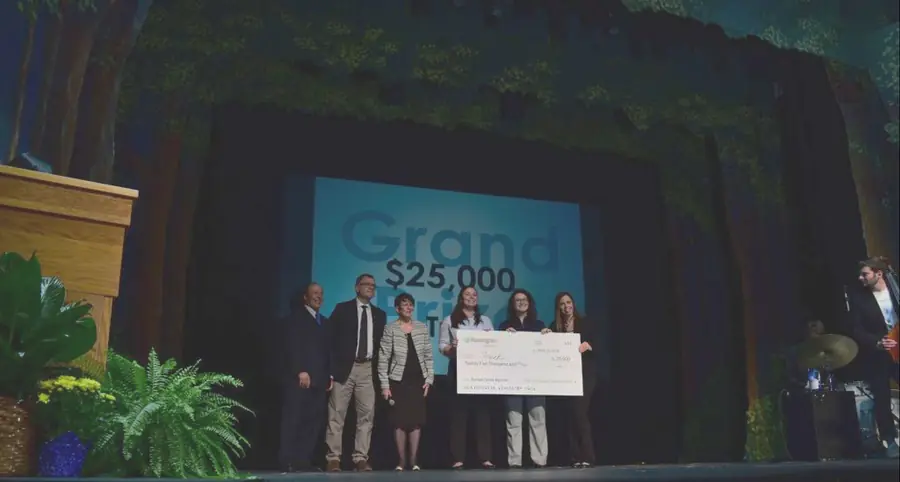
24 teams pitch by track. 12 finalists are selected.
Technology transfer, IP, working with industry. Open to universities and partners.
Main stage, 12 finalists, the winner announced, networking evening.
Investment, not a grant
The winner receives capital to build with, not a one-off payment: investment in exchange for equity on the terms of the most recent round, or a convertible note, depending on the stage of the project. The team keeps control and its IP rights.
Eight tracks
Tracks build on the scientific schools historically strong in Russia and the CIS. Peaceful, civilian use only.
Space & satellite systems
Civilian space, remote sensing, comms, navigation, data
Energy & nuclear technologies
Efficiency, storage, peaceful nuclear, climate
Advanced materials & metallurgy
Alloys, composites, coatings for civilian industry
Mathematics, cryptography & trustworthy AI
Algorithms, optimisation, data protection, explainable models
Biomedicine & diagnostics
Instruments, diagnostics, biomedical tools
Food, agriculture & water
Precision agriculture, food and water security
Instrumentation & microelectronics
Sensors, measurement systems, civilian electronics
Open interdisciplinary
Cross-disciplinary work that does not fit one category
A personal recommendation beats any announcement.
Strong work is found through people, not mailing lists: a supervisor remembers a student, a colleague forwards an email to the department, someone names an expert worth asking. Three ways to do that in about a minute. No points and no leaderboards - anyone who brings in a team or an expert is named in the end-of-cycle report, with their consent.
Forward to a colleague
A ready-written email with the dates, terms and a link. Edit it to sound like you - it will be read more carefully that way.
Ready-written email below ↓Nominate a team
You know whose result is strong enough. A nomination is one page, with no registration.
info@i8gl.comRecommend an expert
Name someone who belongs on the jury or among the mentors. We will write to them ourselves and cite you - or not, if you would rather we did not.
info@i8gl.comThe link is not for analytics; it is so we know who to thank. Everything works without it.
Big Ideas is an annual research competition for universities across Russia and the CIS. Applications are open until 15 February 2027; entry is free and no legal entity is required. The grand prize is investment of up to ₽50M on partnership terms: authors keep their intellectual property, and the company and its jobs stay in the team’s own country. Regional rounds run in spring 2027 and the national finale is 26-28 May. Every eligible application receives written expert comments. Details: bigideas.i8gl.com
Where this work happens
Equipment and work of this class is what our tracks deal with. The plates illustrate the subject area; they are not competition entries.
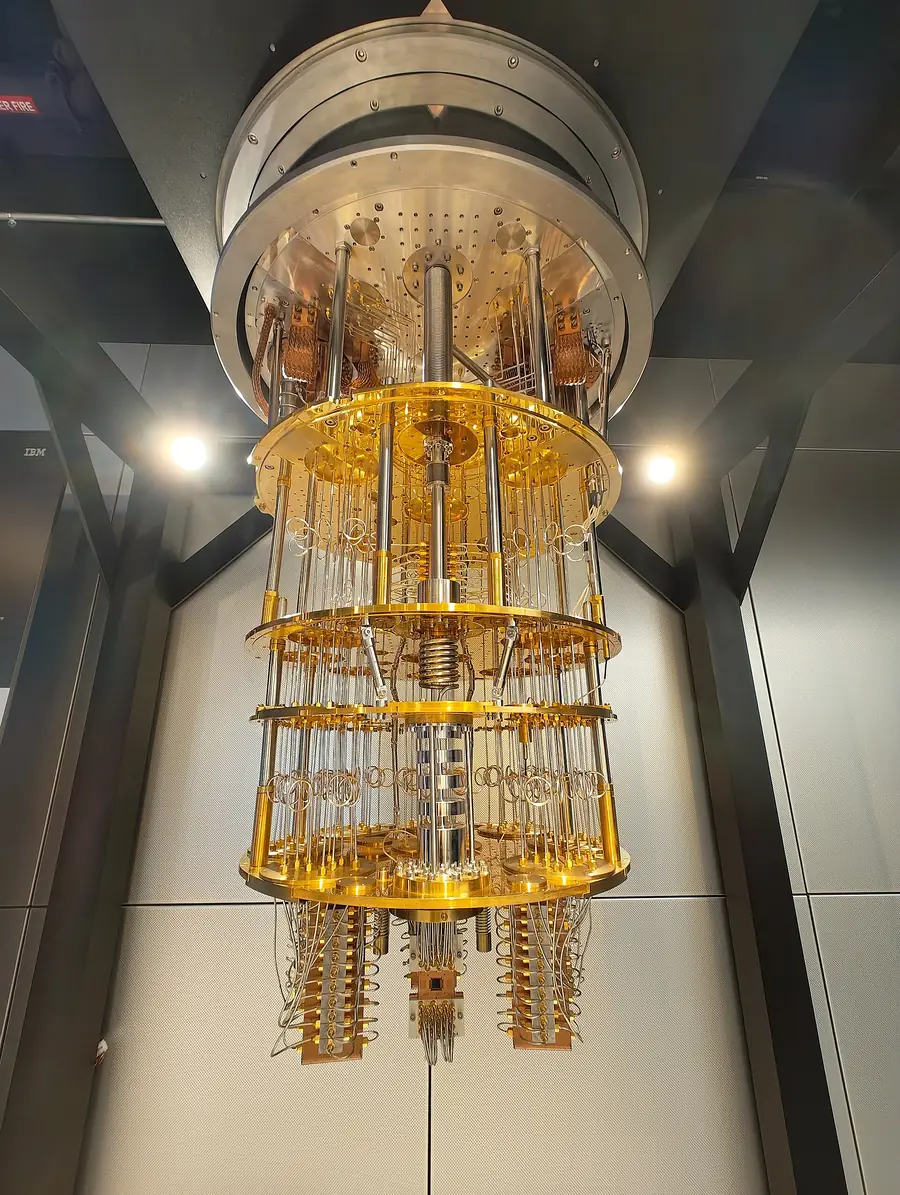
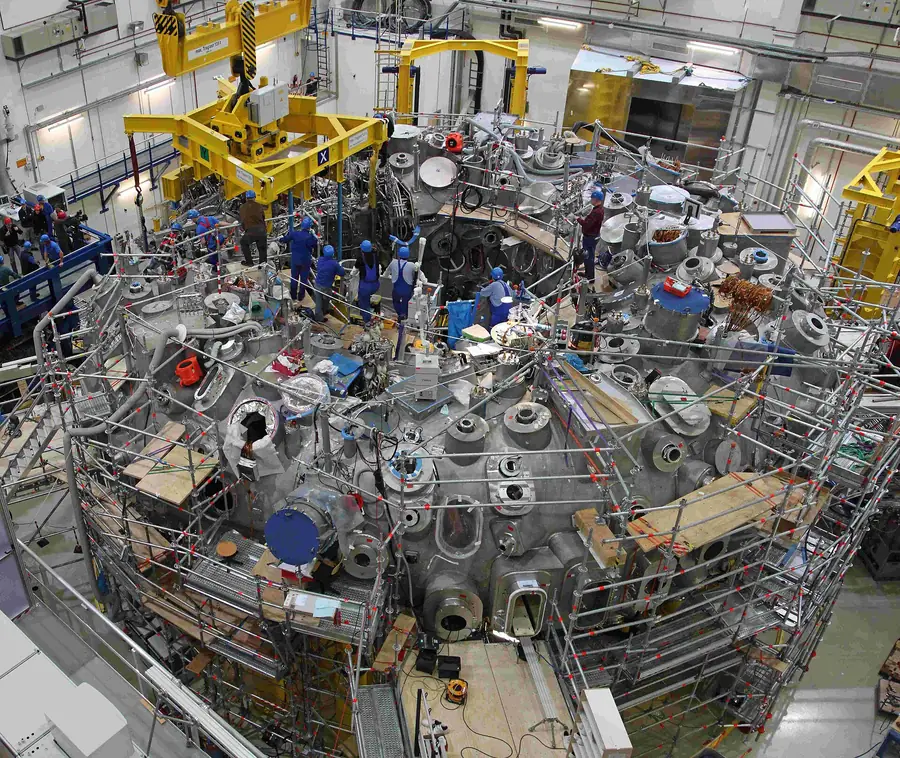
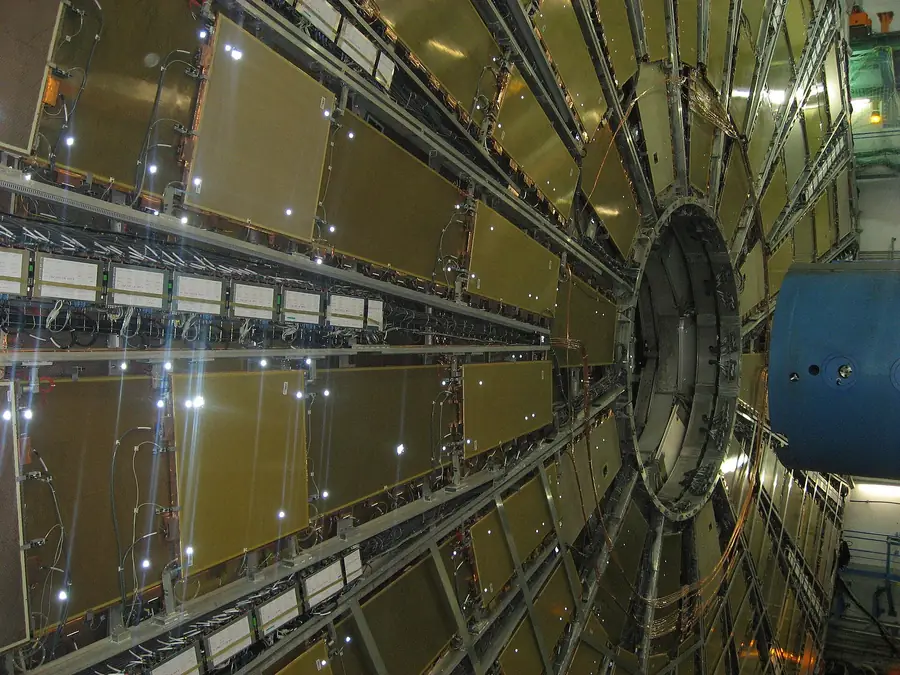
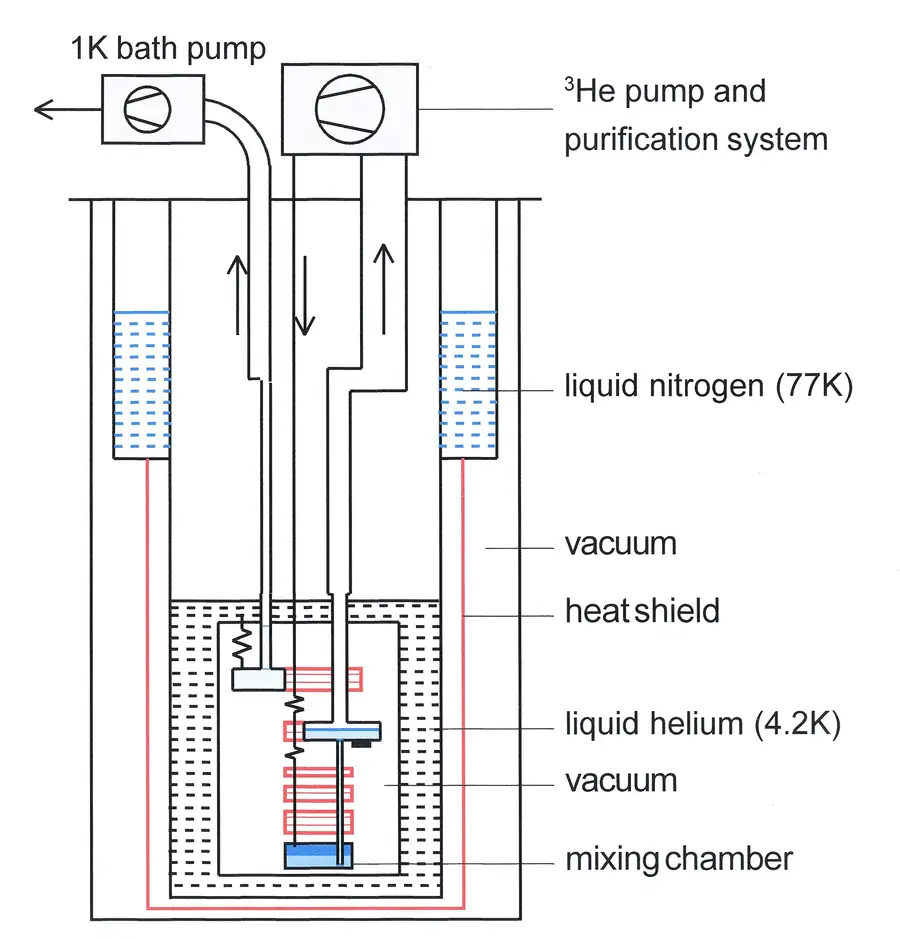
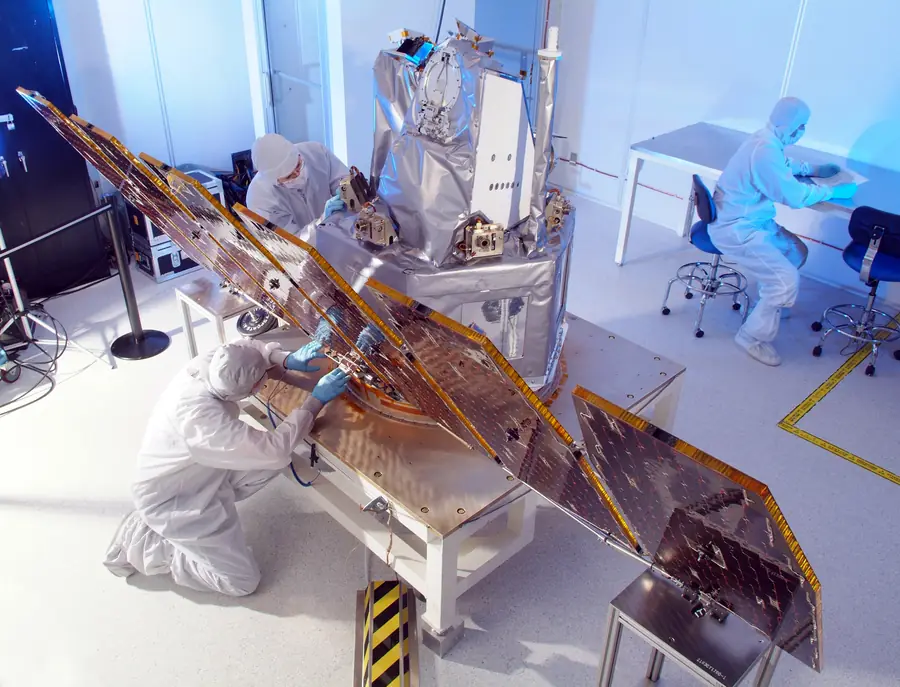
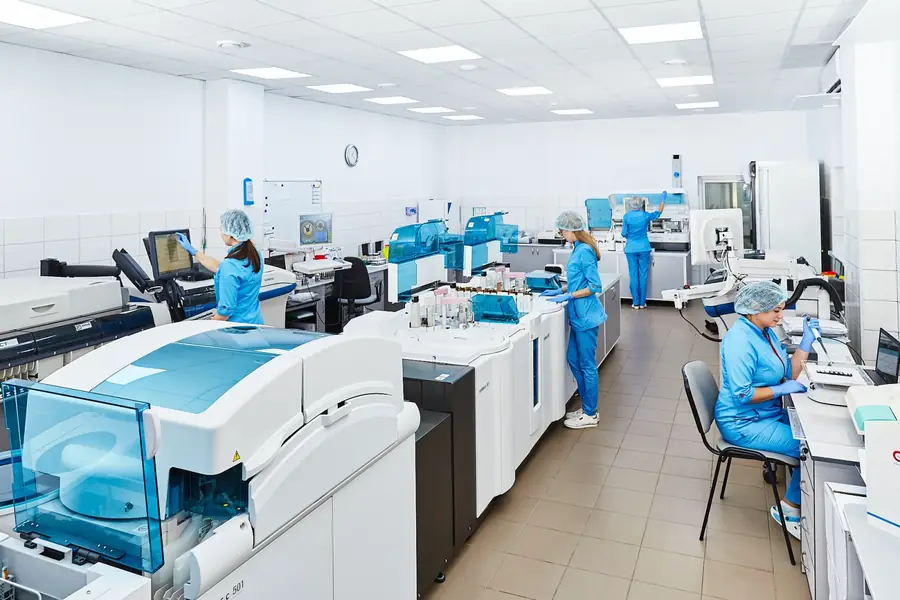
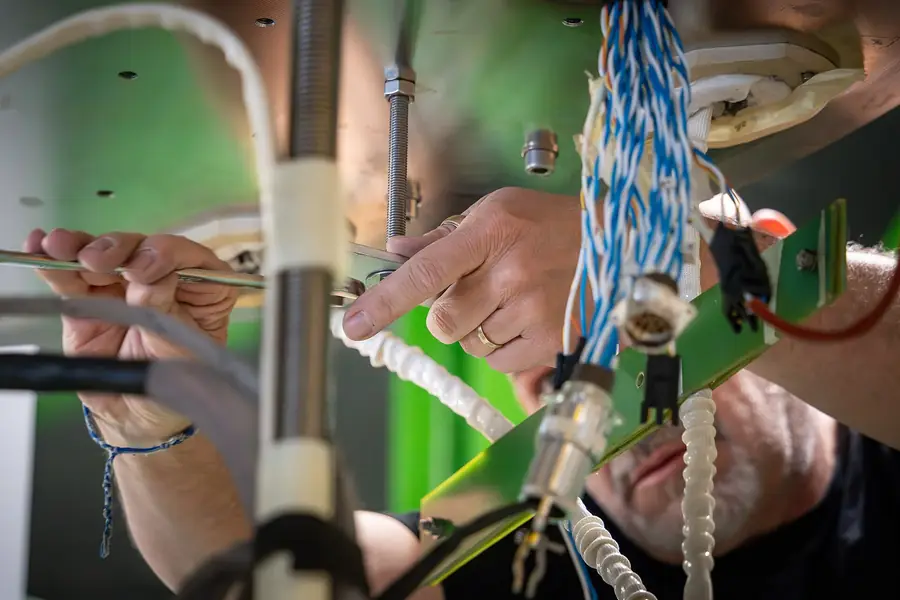
Toned as cyanotype: halftone over the logo blue. Photographs: OJB Quantum (CC BY 4.0); Max-Planck-Institut für Plasmaphysik, Tino Schulz (CC BY-SA 3.0); Dr. Bernd Gross (CC BY-SA 4.0); Орешкина Екатерина Александровна (CC BY-SA 4.0); Warrenmck (CC BY-SA 4.0); Adwaele (CC BY-SA 3.0); Mmma98 (CC BY-SA 4.0). The rest are public domain (NASA, NIST) and CC0.
The jury
Applications are assessed on one set of criteria: scientific novelty, evidence, civilian benefit, team and feasibility. Named members will be announced in November 2026.
Six ways to take part
Apply
Online form, up to 10 slides, free. Written feedback for every eligible applicant.
Check eligibility →Nominate a team
You know whose result is strong enough. A nomination is one page; from there we work with the team and with you. The lab stays in the project.
info@i8gl.com →Host a round
You bring the venue, hall and local partners - we bring the programme, judges and promotion.
info@i8gl.com →Become a judge
Assess applications on one set of criteria, 6-10 hours per cycle. NDA and non-solicitation.
info@i8gl.com →Become a mentor
6 weeks with a semi-finalist team, 1-2 hours a week, voluntarily. Mentoring is run by our sister project The Night Climbers. Mentors advise and may not hold equity in a team.
The Night Climbers →Become a partner
Sponsor track prizes, take a stand at the finale, access the project pipeline.
info@i8gl.com →Volunteer
Help at rounds and the finale: registration, logistics, filming, social media.
info@i8gl.com →Partnership programme
The prize pool is built with partners: funds, enterprises and development institutions. The tiers below are a framework for discussion; all seats are open.
 Big Ideas is an independent initiative within the Yellow Door / Innov8 Global ecosystem. Winners gain access to the Intensive programmes and to the fund.
Priority outreach circle
The universities we are approaching first - their labs, accelerators and technology-entrepreneurship programmes.
This is an outreach priority list, not an eligibility list. Partnership, sponsorship and official status are not yet confirmed. [CONFIGURE]
Your university not on the list?
It changes nothing about your application. A team from any university in Russia or a participating CIS country may apply - the list above only says who we are talking to first, and has no bearing on eligibility or scoring.
We will approach them ourselves. If you study or work there, tell us whether we may cite you.
Value stays with the authors
Participation never requires transferring intellectual property, data or samples. Partnerships must strengthen the team and its institution, not relocate technology and people.
The competition is for peaceful civilian work only. A quick check returns a green, amber or red level.
Frequently asked
Applications open 1 October 2026
Check your eligibility in two minutes and get notified when applications open.